

1: Why SWM Rules 2026 Matter
The status quo was unsustainable: India generates roughly 1.85 lakh tonnes of municipal waste daily. Much of this was mixed, uncollected, or dumped. In January 2026, the government notified the SWM Rules 2026 to change that. These new rules emphasize source segregation, recycling, and accountability for all.
- Supersede old rules: SWM 2026 replaces the 2016 rules from April 2026.
- Circular economy: The government calls it a “paradigm shift” towards circular economy and producer responsibility. Instead of waste going to landfills, materials are recovered and recycled.
- Digital monitoring: A central theme is digital traceability. A new online portal will register and track every waste generator and processor.
The goal is cleaner cities and rural areas. Officials say it’s “structured compliance and digital monitoring” of waste. For example, all stakeholders (local bodies, Bulk Waste Generators, recyclers, landfills) must register online and submit regular reports. This transparency was unheard-of before.
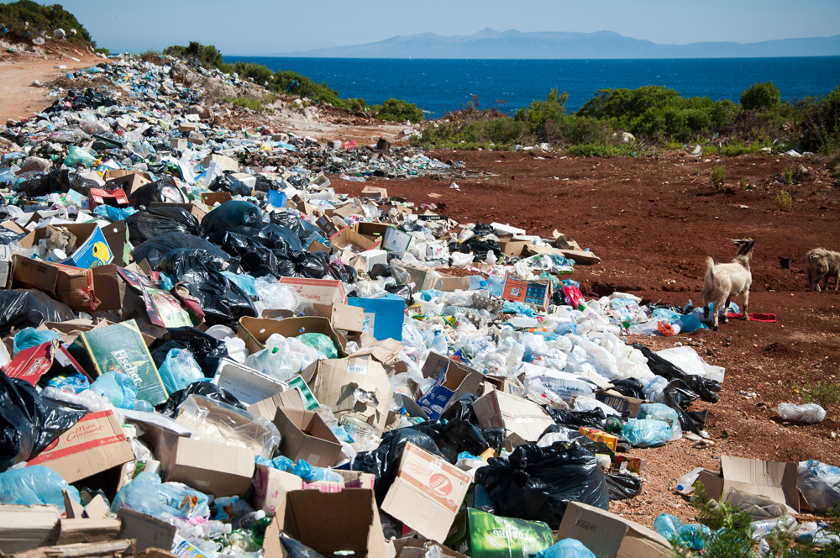
Key Point: Waste is now treated as a resource to manage responsibly, not just trash to discard. The rules tackle the mountains of waste by enforcing segregation, recycling, and penalties for violators.
2: Four-Stream Segregation at Source
A cornerstone of SWM 2026 is mandatory segregation of waste into four streams at the point of generation. Every household, shop, institution or factory must sort its garbage into:
- Wet waste: Biodegradable kitchen/garden waste (vegetable peels, leftover food, etc.). Must be composted or bio-methanated nearby.
- Dry waste: Recyclables like plastic, paper, metal, glass, wood. These go to Material Recovery Facilities (MRFs) for sorting and recycling.
- Sanitary waste: Used diapers, sanitary napkins, tampons, condoms, etc. These must be securely wrapped and collected separately.
- Special care waste: Household hazardous items – paint cans, disinfectants, e-waste, expired medicines, mercury thermometers, etc. These must be handed only to authorized agencies or at designated drop-off centers.
This four-bin system ensures high-value materials are recovered and organics are turned into compost instead of rotting in a dump. For example, wet waste from homes is ideal for compost pits or biogas plants, while clean plastic and paper can be recycled. Sanitary and hazardous wastes are treated as regulated streams, not thrown in open bins.
By segregating at source, SWM 2026 makes recycling efficient and landfills contain only genuinely unusable residue.
Key Rule: Mixing streams is prohibited. Any mixed or unsegregated waste will attract penalties. For instance, the rules explicitly forbid dumping or burning waste improperly.
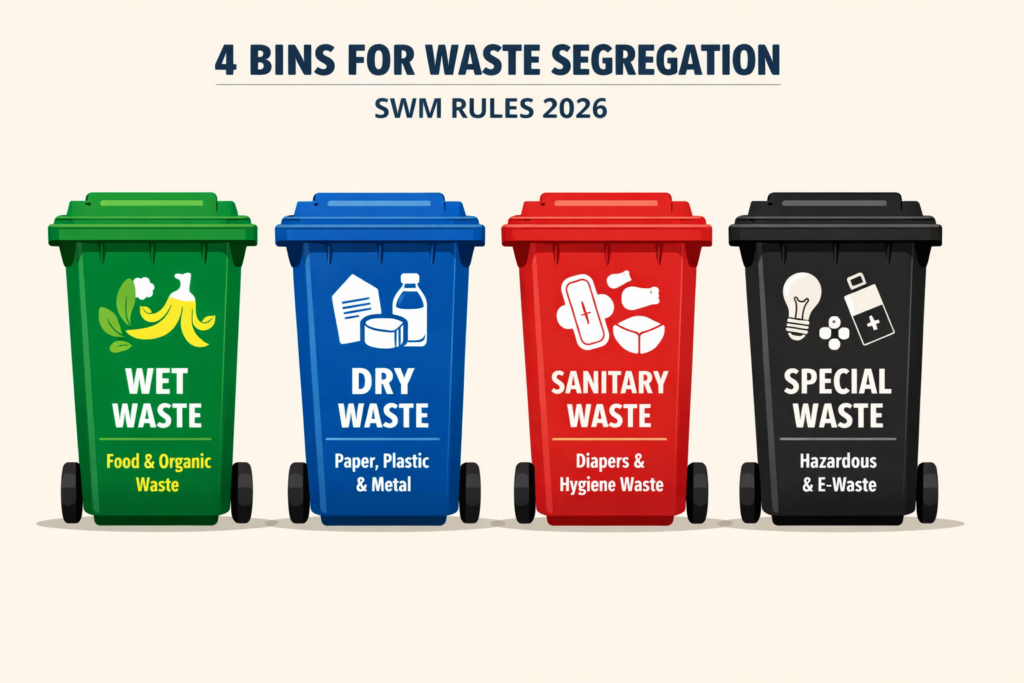
Color-coded bins for wet, dry, and sanitary waste. Under SWM Rules 2026, every waste generator must use a multi-bin system to sort waste into wet/dry/sanitary/special streams.
Key Point: Segregation at source is now law. Proper binning at home, offices, and shops lays the foundation for all recycling and disposal to follow.