

3: Bulk Waste Generators (BWGs) – Who and What
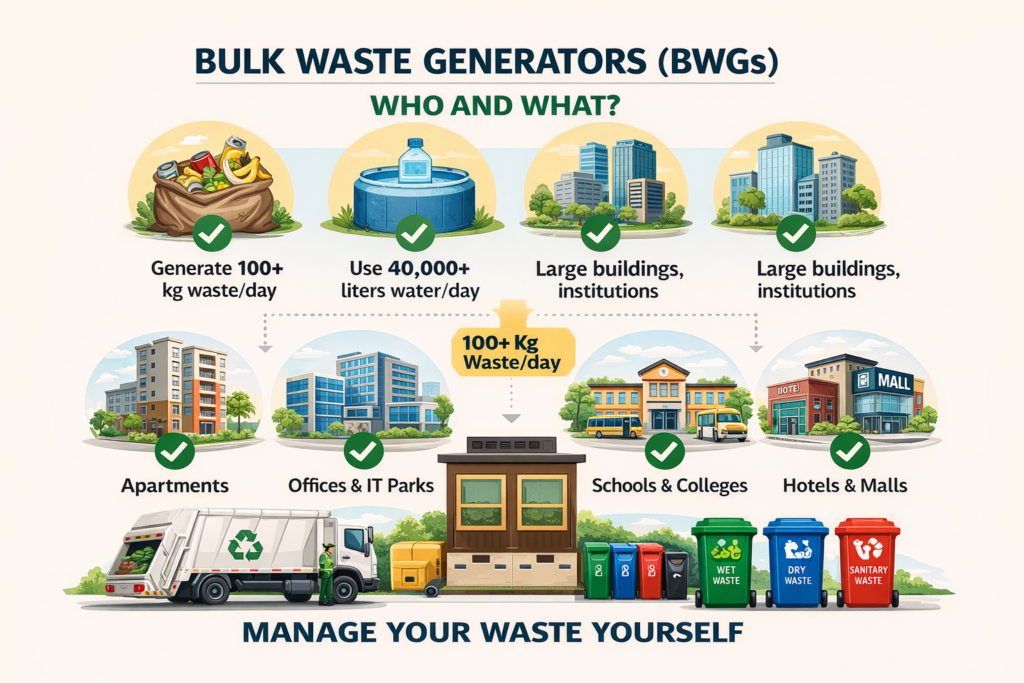
The new rules put bulk waste generators (BWGs) in the spotlight. A BWG is any entity that meets at least one of these criteria:
- Floor area ≥ 20,000 sq. meters (e.g. large apartment complexes, factories).
- Water usage ≥ 40,000 liters per day.
- Waste generation ≥ 100 kg per day.
This definition covers 30% of India’s daily waste[10]. BWGs include big apartment buildings, offices, IT parks, hospitals, hotels, markets, colleges, etc.
BWG Responsibilities:
- On-site processing: BWGs must process their own wet waste on-site if possible. For example, a large apartment block would install composters or biogas plants for its kitchen waste.
- EBWGR certificates: If on-site treatment isn’t feasible, the BWG must obtain an “Extended Bulk Waste Generator Responsibility (EBWGR)” certificate. This certificate – issued by a registered facility – proves the waste was treated properly elsewhere. Essentially, it’s like a permit to outsource your waste, but with accountability.
- Segregation & routing: BWGs must segregate all waste at source and then ensure each stream goes to the right place (wet to composters, dry to recyclers, etc.). Unsegregated waste from a BWG is a big violation.
- Reporting: Large generators must register on the CPCB portal and submit regular reports on their waste quantities and treatment.
Context and Examples:
- In older rules (2016), cities like Bangalore set up Bulk Waste Monitoring Cells and required BWGs to install processing units within months[13]. SWM 2026 formalizes and nationalizes these duties. ULBs are instructed to notify and guide BWGs through byelaws and notices[13].
- Many new industrial parks and gated communities are already planning for onsite composters in anticipation of these rules.
- Bulk generators will also be charged user fees for waste collection (as local bodies prescribe).
Key Point: Under SWM 2026, large waste producers can’t just dump waste on the municipality — they must manage it themselves. This is a game-changer: about 30% of waste will now be handled at source by these generators.
4: The Role of Local Bodies and Technology
SWM 2026 gives responsibilities to urban local bodies (ULBs), panchayats, and technology alike.
- Mandatory registration: Every ULB, Gram Panchayat, waste-processing facility, landfill, waste-to-energy plant, and even incinerator must register on the central portal[5]. This means no silent operations – even a small compost unit in a city must be on the system.
- Reporting and audits: Registered entities must file quarterly and annual returns on the portal. The portal aggregates nationwide data on waste flows, making the system transparent. In effect, authorities (and even citizens) can track how much waste each city or town is generating, segregating, and disposing.
- Enforcement: The rules revive the polluter pays principle. State pollution boards can levy “environmental compensation” (fines) for violations like false reports or illegal dumping. For instance, operating a waste facility without registration or mixing waste streams can trigger hefty penalties.
- Standards: New quality standards apply to landfills (gas emissions, leachate control), compost (compost quality), and incineration (emission limits) Bulk generators and facilities must meet these standards or face action..
Technology & Portal:
A centralized digital portal (by CPCB) is the backbone of SWM 2026. It brings all data online: waste collection routes, segregation rates, processing capacity, etc. Mobile apps and QR-code bins are being piloted in some cities for real-time tracking. The portal’s dashboards will be public, pushing transparency.
Key Insight: Digital monitoring shifts India’s waste sector from opaque to data-driven. According to DownToEarth, these rules mark “a centralised national architecture” with standardised reporting and auditing.
Key Point: The success of SWM 2026 hinges on enforcement and data. Local bodies must use GIS tracking, audits, and citizen complaints to ensure compliance. ULBs are also encouraged to offer waste-management services (and charge fees) to cover costs.